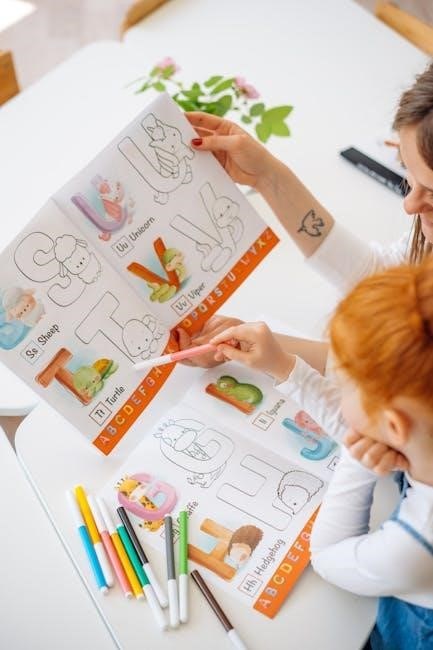
Large letter tracing worksheets, often available as PDF downloads, are fundamental tools for early childhood education, aiding in pre-writing skills and letter recognition.
These resources feature generously sized letters, facilitating easier control for developing fine motor skills and building confidence in young learners.
Numerous online platforms offer a diverse selection of these printable worksheets, catering to various learning needs and preferences.
What are Large Letter Tracing Worksheets?
Large letter tracing worksheets are specifically designed educational resources aimed at helping young children learn to write letters. Typically available as easily downloadable PDF files, these worksheets present letters in a significantly larger size than standard handwriting practice sheets.
This increased size is intentional, providing ample space for little hands to practice forming each letter with greater control and accuracy. The worksheets usually feature dotted lines or faded letters that children trace over, reinforcing muscle memory and developing proper letter formation techniques.
These resources often focus on both uppercase and lowercase letters, sometimes individually or in combination. Many PDF worksheets also incorporate fun illustrations or themes to keep children engaged and motivated during practice. They are a cornerstone of early literacy development, preparing children for independent writing.
Benefits of Using Large Letter Tracing Worksheets
Utilizing large letter tracing worksheets, often found as convenient PDF downloads, offers numerous advantages for early learners. Primarily, they significantly enhance fine motor skill development, crucial for handwriting success. The larger letter size allows for easier manipulation of writing tools, building hand-eye coordination and control.
These worksheets also foster letter recognition and proper letter formation. Repeated tracing reinforces the visual memory of each letter’s shape, while the guided path encourages correct stroke order. PDF format ensures easy printing and accessibility.
Furthermore, tracing worksheets boost confidence in young writers, reducing frustration and promoting a positive attitude towards learning. They provide a structured, low-pressure environment for practice, setting a strong foundation for future writing endeavors.

Developmental Stages & Readiness
Large letter tracing worksheets (often PDFs) are best introduced when children demonstrate foundational pre-writing skills and hand strength.
Readiness varies, but typically emerges around ages 3-5, coinciding with increased fine motor control.
Pre-Writing Skills: Building the Foundation
Before embarking on large letter tracing worksheets – frequently found as convenient PDF downloads – children benefit immensely from developing crucial pre-writing skills. These foundational abilities lay the groundwork for successful letter formation and overall writing proficiency.
Key pre-writing skills include strengthening fine motor muscles through activities like playing with playdough, using crayons for scribbling, and completing puzzles. Developing hand-eye coordination is also vital; simple tasks like stringing beads or building with blocks contribute significantly.
Furthermore, understanding basic shapes and lines – vertical, horizontal, and circular – is essential. Practicing these shapes independently, before introducing letter forms, helps children grasp the fundamental strokes involved in writing. These preparatory exercises ensure a smoother transition when utilizing large letter tracing worksheets, fostering confidence and reducing frustration.
When to Introduce Large Letter Tracing
Determining the appropriate time to introduce large letter tracing, often utilizing readily available PDF worksheets, depends on a child’s individual developmental readiness. Generally, most children are prepared to begin around ages 3-5, but this varies significantly.
Look for signs like demonstrated interest in drawing and scribbling, the ability to hold a writing utensil with a reasonable grip, and emerging hand-eye coordination. A child should also be able to recognize some letters, even if they can’t yet write them.
Starting with large letter tracing worksheets allows for success, as the bigger size accommodates developing fine motor skills. Avoid pushing it if a child shows resistance or frustration; revisiting the activity later is always an option. Focus on making it a playful experience, not a stressful one.

Types of Large Letter Tracing Worksheets
Large letter tracing worksheets, frequently found as PDF files, come in diverse formats: uppercase, lowercase, individual letter focuses, and combined letter practice.
Uppercase Letter Tracing
Uppercase letter tracing worksheets, readily available as PDF downloads, specifically target the practice of writing capital letters. These worksheets typically present each letter in a large, clear format, providing ample space for young learners to trace along dotted lines.
The focus on uppercase letters initially helps children develop foundational motor skills and letter recognition without the added complexity of ascenders and descenders found in lowercase letters; Many PDF resources categorize worksheets alphabetically, allowing focused practice on individual letters like ‘A’, ‘B’, ‘C’, and so on.
Variations include worksheets with directional arrows to guide the tracing path, and those that incorporate fun illustrations alongside the letters to maintain engagement. Consistent practice with these worksheets builds muscle memory and prepares children for more complex writing tasks.
Lowercase Letter Tracing
Lowercase letter tracing worksheets, commonly found as PDF files, concentrate on mastering the formation of small letters. These resources present each letter with generous tracing space, accommodating developing fine motor skills. Unlike uppercase practice, lowercase tracing introduces the challenge of ascenders (like ‘b’, ‘d’, ‘h’) and descenders (like ‘g’, ‘p’, ‘q’).
PDF worksheets often group letters with similar formations to highlight key differences and commonalities, aiding comprehension. For example, practicing ‘a’, ‘d’, ‘g’, and ‘q’ together reinforces the circular stroke and descending tail.
Many worksheets incorporate visual cues, like starting dots and directional arrows, to guide the tracing process. Consistent practice with these PDF resources builds confidence and prepares children for fluid, independent handwriting.
Worksheets Focusing on Specific Letters (e.g., ‘A’, ‘R’)
Large letter tracing worksheets, readily available as PDF downloads, often isolate individual letters for focused practice. This targeted approach is particularly beneficial for children struggling with specific letter formations, like ‘A’ or ‘R’. These PDF resources dedicate an entire sheet – or several – to a single letter, offering ample repetition.
Worksheets for letters like ‘R’ frequently include variations in stroke direction and starting points, reinforcing muscle memory. For ‘A’, emphasis might be placed on mastering the diagonal lines and connecting point.
These specialized PDF worksheets often incorporate related images (e.g., ‘A’ for apple) to enhance engagement and contextual learning, making practice more meaningful and memorable.

Worksheets Combining Multiple Letters
Large letter tracing worksheets, often found as convenient PDF files, progress beyond single-letter practice by combining several letters on a single sheet. These worksheets are designed to build fluency and encourage children to transition between different letter formations.
A common format involves grouping letters with similar characteristics – for example, letters sharing curved lines (C, O, S) or straight lines (L, T, I); This comparative approach aids in recognizing commonalities and differences.
More advanced PDF worksheets might present simple words or letter combinations (e.g., “at,” “in”) for tracing, bridging the gap between individual letter practice and early writing skills. These resources help develop a sense of rhythm and flow in handwriting.

Creating & Finding Worksheets

Large letter tracing worksheets in PDF format are readily available online, both free and as part of paid packs, or can be easily created using various tools.
Free Printable Resources Online
Numerous websites offer free, downloadable large letter tracing worksheets in PDF format, providing accessible resources for parents and educators; Websites like Twisty Noodle allow for customized worksheet creation, including specific letters or combinations, while Education.com boasts a vast library of pre-made tracing pages.
K5 Learning provides a structured approach with worksheets categorized by skill level, and AllKidsNetwork offers a variety of themed tracing sheets to maintain engagement. These resources generally cover both uppercase and lowercase letters, often with accompanying illustrations to enhance the learning experience.
A quick internet search for “large letter tracing worksheets PDF” yields countless options, but it’s crucial to verify the source and ensure the content aligns with educational goals. Many blogs and educational resource sites also offer free printables as lead magnets or part of their content offerings.
Paid Worksheet Packs & Bundles
While many free resources exist, paid worksheet packs and bundles offer more comprehensive and curated collections of large letter tracing worksheets in PDF format. Platforms like Teachers Pay Teachers host a wide array of options created by educators, often including themed packs, differentiated levels, and answer keys.
These bundles frequently extend beyond simple tracing, incorporating letter recognition activities, coloring pages, and early writing prompts. Super Simple Worksheets and similar sites provide professionally designed packs focusing on specific skills or letter groups.
Investing in paid resources can save time and ensure high-quality, developmentally appropriate content. PDF bundles often include multiple variations of each letter, catering to diverse learning styles and providing ample practice opportunities. Consider the bundle’s scope and alignment with your child’s or student’s needs before purchasing.
DIY Worksheet Creation: Tools & Techniques
Creating your own large letter tracing worksheets in PDF format offers ultimate customization. Simple tools like Microsoft Word or Google Docs can be used to insert large text boxes for each letter, then duplicated and adjusted for tracing lines.
For more visually appealing worksheets, consider using graphic design software like Canva, which provides pre-made templates and easy-to-use design elements. Alternatively, dedicated worksheet generators online allow you to input parameters – letter size, font, line thickness – and automatically create PDF worksheets.
Hand-drawing worksheets is also an option, then scanning them to create a digital PDF file. Remember to prioritize clear, bold letterforms and appropriately spaced tracing paths for optimal learning. This approach allows tailoring worksheets to specific student needs and interests.
Tips for Effective Use
Large letter tracing worksheets (PDF) are most effective with proper posture, a comfortable grip, and short, focused sessions to maintain engagement.
Positive reinforcement and making it fun will boost a child’s confidence and motivation.
Proper Pencil Grip & Posture
When utilizing large letter tracing worksheets (PDF), establishing a correct pencil grip and posture is paramount for developing efficient handwriting skills. Encourage a dynamic tripod grip – holding the pencil between the thumb and index finger, supported by the middle finger.
Avoid a clenched fist or overly tight grip, as this leads to fatigue and hinders control. Ensure the child sits with both feet flat on the floor, back straight, and the worksheet positioned at a slight angle.
Proper lighting is also crucial to reduce eye strain. Demonstrate the correct technique and gently correct any improper habits. A comfortable and ergonomic setup fosters focus and prevents frustration, maximizing the benefits of tracing practice.
Regular breaks are important to avoid hand fatigue, especially during longer sessions.
Making Tracing Fun & Engaging
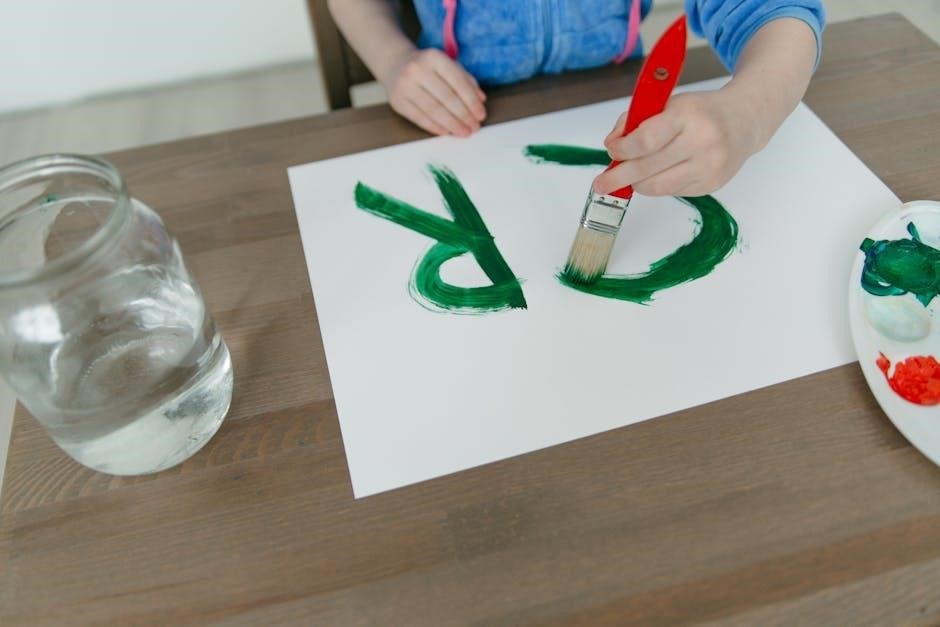
Transforming large letter tracing worksheets (PDF) into enjoyable activities is key to maintaining a child’s motivation. Incorporate colorful markers or crayons instead of solely relying on pencils to add visual appeal.
Turn tracing into a game by timing sessions or offering small rewards for completion. Create themed worksheets based on the child’s interests – animals, vehicles, or favorite characters.
Use stickers or stamps to mark completed letters or sections. Play music during tracing to create a relaxed and positive atmosphere.
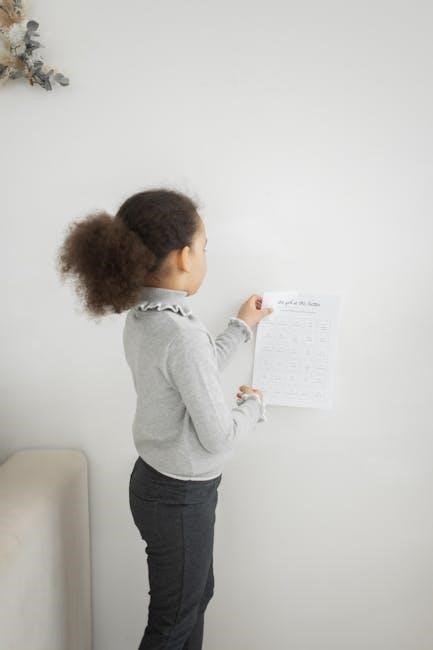
Consider incorporating sensory elements, like tracing letters in sand or shaving cream, to reinforce learning through different modalities. Remember, a playful approach fosters a positive association with learning to write!
Adapting Worksheets for Different Skill Levels
Large letter tracing worksheets (PDF) offer excellent adaptability for varying skill levels. For beginners, start with worksheets featuring dotted lines and heavier tracing guides, providing maximum support.
As proficiency grows, transition to worksheets with fainter lines or those requiring tracing within a defined space without direct guidance. Introduce worksheets with directional arrows to reinforce correct letter formation.
For advanced learners, incorporate activities like tracing letters within sentences or copying words.
Modify the complexity by reducing the size of the letters or adding distractions on the page. Creating customized worksheets tailored to individual needs ensures continuous progress and prevents frustration.

Beyond Tracing: Next Steps
Large letter tracing worksheets (PDF) build a foundation for independent writing; encourage freehand letter formation and word building to solidify skills.
Integrate tracing with creative activities like coloring and storytelling to foster a love of language and learning.
Transitioning to Independent Letter Writing
Large letter tracing worksheets (PDF) serve as a crucial stepping stone, but the ultimate goal is independent letter formation. Gradually reduce the reliance on tracing by introducing worksheets with faded letter guides, or dotted lines requiring more memory and control.
Encourage children to copy letters and words directly, starting with those they’ve frequently traced. Provide ample opportunities for practice, using various mediums like paper, sand, or even shaving cream for a multi-sensory experience.
Focus on proper letter formation, offering gentle guidance and positive reinforcement. Break down complex letters into simpler strokes; Celebrate effort and progress, rather than perfection, to build confidence and a positive attitude towards writing. Remember, consistent practice with PDF worksheets and beyond is key!
Introduce simple sentence construction alongside letter practice to demonstrate the practical application of writing skills.
Integrating Tracing with Other Learning Activities
Large letter tracing worksheets (PDF) aren’t isolated exercises; they integrate beautifully with broader learning. Combine tracing with phonics by having children trace letters while saying their corresponding sounds. Follow up by asking them to identify objects starting with that letter.
Use traced letters to build simple CVC (consonant-vowel-consonant) words. Incorporate art projects – children can trace letters onto craft materials or create letter collages. Storytelling is another avenue; trace letters to spell out key words from a favorite tale.
Sensory bins filled with rice or sand offer tactile tracing opportunities. Make it playful! Turn tracing into a game, rewarding effort and participation. Remember, the PDF worksheets are a tool to enhance, not limit, the learning experience.
Connect tracing to real-world applications like writing names or short messages.

Resources & Further Information
Numerous websites offer free large letter tracing worksheets (PDF) downloads. Explore stock image sites for inspiration when creating custom learning materials.
Websites Offering Printable Worksheets
Several online platforms provide a wealth of large letter tracing worksheets in PDF format, readily available for download and printing. Education.com boasts an extensive library, categorized by letter and skill level, offering both free and premium options.
K5 Learning is another excellent resource, specializing in foundational skills, including letter tracing, with customizable worksheets. Twinkl provides a vast collection, often requiring a subscription, but offering high-quality, visually appealing designs.
Preschool Mom offers a selection of free printable tracing pages, focusing on both uppercase and lowercase letters. Don’t overlook Super Simple, which provides engaging worksheets alongside related learning songs and videos. These sites cater to diverse learning styles and provide convenient access to valuable educational resources.
Stock Image & Vector Art Resources for Worksheet Inspiration
Creating unique large letter tracing worksheets often benefits from visual inspiration. Shutterstock and iStockphoto offer extensive libraries of vector art and stock images, including hand-drawn letters and playful designs suitable for children’s learning materials.
Vecteezy provides a selection of free and premium vector graphics, allowing you to customize letter shapes and backgrounds. Adobe Stock integrates seamlessly with Adobe Creative Cloud, offering high-resolution images and editable vectors.
These resources can help you develop visually appealing PDF worksheets, enhancing engagement and motivation for young learners. Consider searching for keywords like “handwritten letters,” “cartoon alphabet,” or “tracing lines” to find relevant assets.